
Good (Rational) Arguments
Not the emotionally-charged, disagreement kind

Key Concept: An argument is a structured set of statements that apply reason to advocate for a certain position or conclusion. Two common forms are logical argument and legal argument.
A logical argument consists of a premise and a conclusion drawn from it. A “sound argument” has a true premise and the conclusion logically follows.
A legal argument looks at a set of facts, applies the relevant rules to the facts, and then draws a conclusion. The goal is to examine facts, justify a decision, and persuade.
The critical thinker will habitually assess (and when needed challenge) the truth of a premise or “fact” before considering or accepting a conclusion.
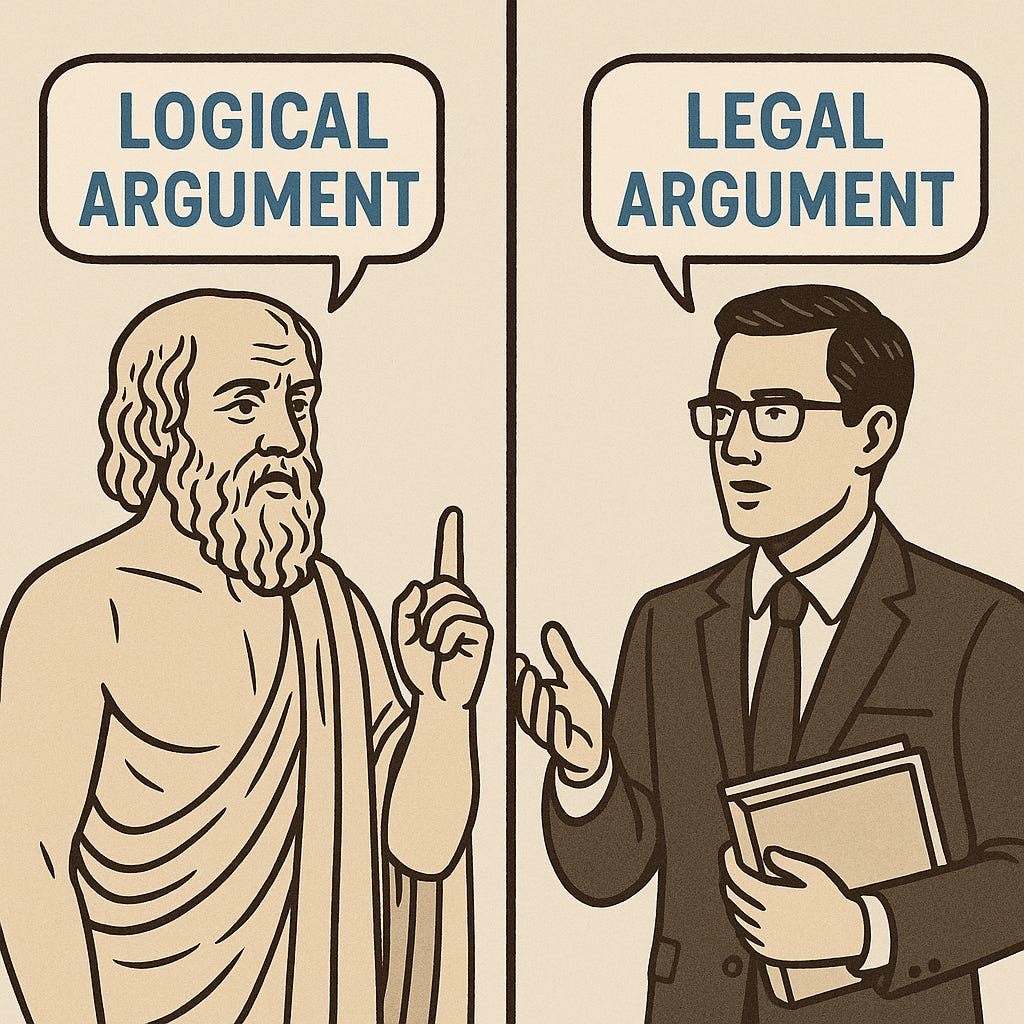
Arguments in the context of critical thought are not the same thing as the emotionally filled disagreements that are commonplace. In critical thought, an argument is a structured set of statements that apply reason to advocate for a particular position or conclusion. Rational arguments can take many forms, but the two most common arguments are based on classical logic or a set of rules. Let's look at each.
Logical arguments are fundamentally about truth and reason.
A logical argument is built on a premise (or multiple premises), and the conclusion is based on that premise. There are two standards to determine whether a logical argument is a good one: Validity requires that the conclusion logically flows from the premise (even if the premise is false). A sound argument is valid, and the premise(s) are true.
Premise 1 > Premise 2 > Conclusion
Arguments based on rules or laws are about justification and persuasion.
A legal argument looks at a set of facts, relevant rules, applies the rules to the facts, and then draws a conclusion or justifies a decision. The five core types of legal arguments are textual (the meaning of the text), intentional (the intent of the rule makers), precedential (based on past decisions), pragmatic (the practical implications), and normative (the ethical or correct implications). The goal is to examine facts, justify a decision, and persuade.
Facts > Rules/Principles > Application > Conclusion